

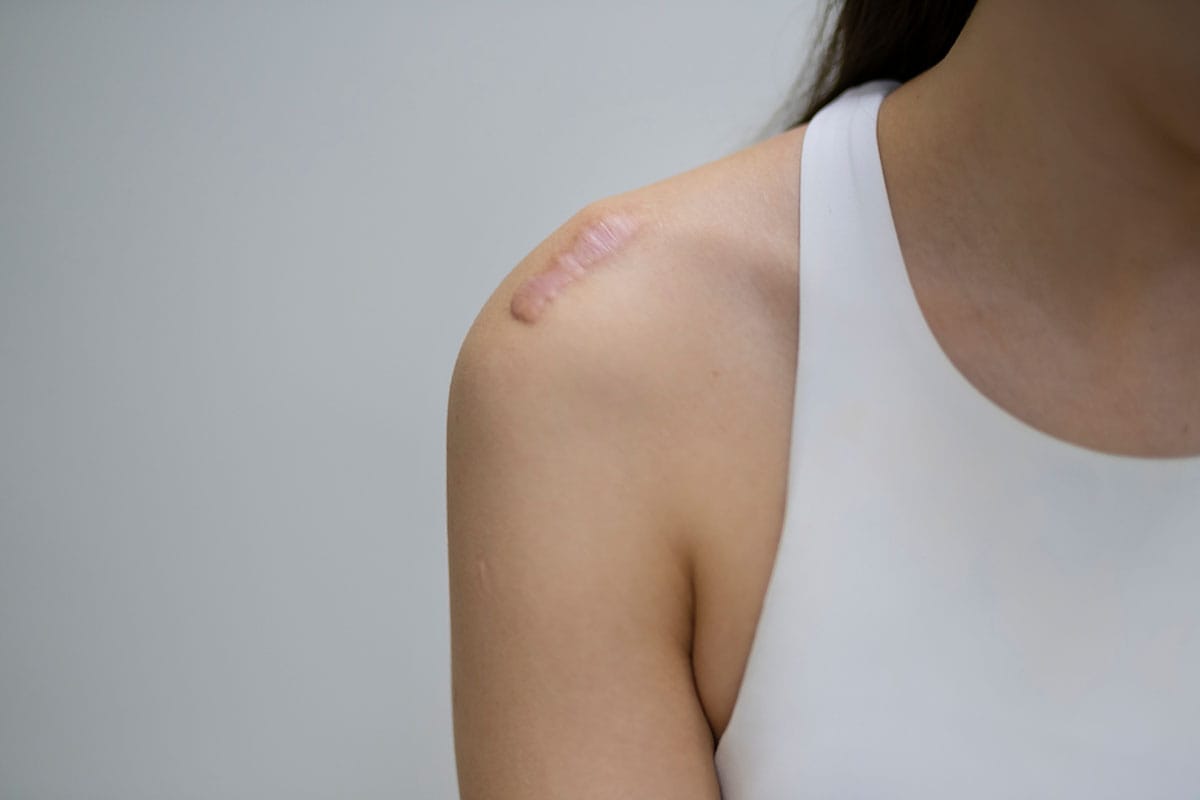
A cut, piercing, burn, or surgical incision may heal, yet the scar can continue to grow. You might notice thick, raised tissue that extends beyond the original wound, feels firm, or becomes itchy. Unlike many scars that soon fade, keloids can be persistent and difficult to remove completely.
At Advanced Plastic and Reconstructive Surgery, Dr. Daron Geldwert and Dr. Darren S. Leong provide individualized care for patients in Rancho Cucamonga and Murrieta, CA. Understanding why keloids develop can help you explore appropriate ways to manage them.
What are keloid scars?
Keloids are raised scars that develop when your body produces excessive scar tissue during wound healing. Unlike a typical scar, a keloid grows beyond the boundaries of the original injury and may continue enlarging over time. Although harmless, keloids can become cosmetically noticeable or cause physical symptoms, particularly when they develop in sensitive areas.
Signs that you may have a keloid include:
- Thick, raised scar tissue extending beyond the original wound
- A smooth, shiny, or firm surface
- Pink, red, brown, or darker coloration
- Gradual enlargement after the wound has healed
- Itching, tenderness, sensitivity, or discomfort
- Tightness or restricted movement in some locations
What causes keloid scars?
Keloids result from an exaggerated wound-healing response in which your body continues producing collagen after it is needed. Several types of skin injury can trigger this process.
Surgery or physical injuries
Any injury that breaks your skin can potentially lead to a keloid. Surgical incisions, cuts, burns, and other forms of trauma may trigger excessive collagen production as your body repairs the damaged tissue, particularly if you are already susceptible to keloids.
Piercings and tattoos
Ear and body piercings create injuries to your skin, making them common triggers for keloids. Tattoos can occasionally cause similar scarring. If you have previously developed keloids, you may want to discuss the risks before undergoing additional piercings or tattoos.
Acne and other skin inflammation
Inflammatory acne can damage deeper layers of your skin and initiate scar formation. In susceptible individuals, this healing response can produce keloids, particularly after more severe acne. Other inflammatory skin injuries may also result in excessive scar tissue.
Individual susceptibility
Some people are simply more likely to develop keloids. Genetics can influence your risk, and keloids are more common in people with darker skin tones. They also occur most frequently in younger individuals, although you can potentially develop one at any age.
How to treat keloid scars effectively?
Keloids can be challenging to treat because simply removing the excess tissue does not prevent it from returning. Your treatment should therefore be individualized according to the scar’s size, location, symptoms, previous treatments, and your tendency to form keloids.
Corticosteroid injections can help soften and flatten raised tissue while reducing inflammation and symptoms such as itching. Silicone gels or sheets and pressure therapy may also help flatten and soften scars over time. Other options can include cryotherapy, which freezes scar tissue, and laser treatment to address characteristics such as redness and texture.
For larger or particularly troublesome keloids, surgical excision may be considered. However, keloids have a significant risk of recurring after surgery when excision is used alone. Your surgeon may therefore recommend combining surgery with additional therapies, such as corticosteroid injections or other postoperative treatments, to help reduce recurrence risk.
Find the right treatment for your keloid scars
Keloid treatment is rarely one-size-fits-all. At Advanced Plastic and Reconstructive Surgery, board-certified plastic surgeons Dr. Daron Geldwert and Dr. Darren S. Leong draw on their extensive surgical and reconstructive experience to develop an individualized approach based on your scar and goals.
If a raised or uncomfortable scar is bothering you, schedule a consultation at our Rancho Cucamonga or Murrieta, CA, location. We can evaluate your keloid and discuss treatment options to improve its appearance, symptoms, and impact on your daily life.

